Compliance guide for buyers
What EN 13432 and ASTM D6400 Actually Test: A Buyer’s Guide to Compostability Claims
“Compostable” is one of the easiest words to print on packaging and one of the hardest to prove. Two standards sit behind most serious claims: EN 13432 in Europe and ASTM D6400 in North America. They do not certify a material in general. They test a finished item, made a specific way, under controlled composting conditions. This guide explains what each standard actually measures, where the two differ, and which documents a buyer should hold before the claim goes on artwork.
The short answer first
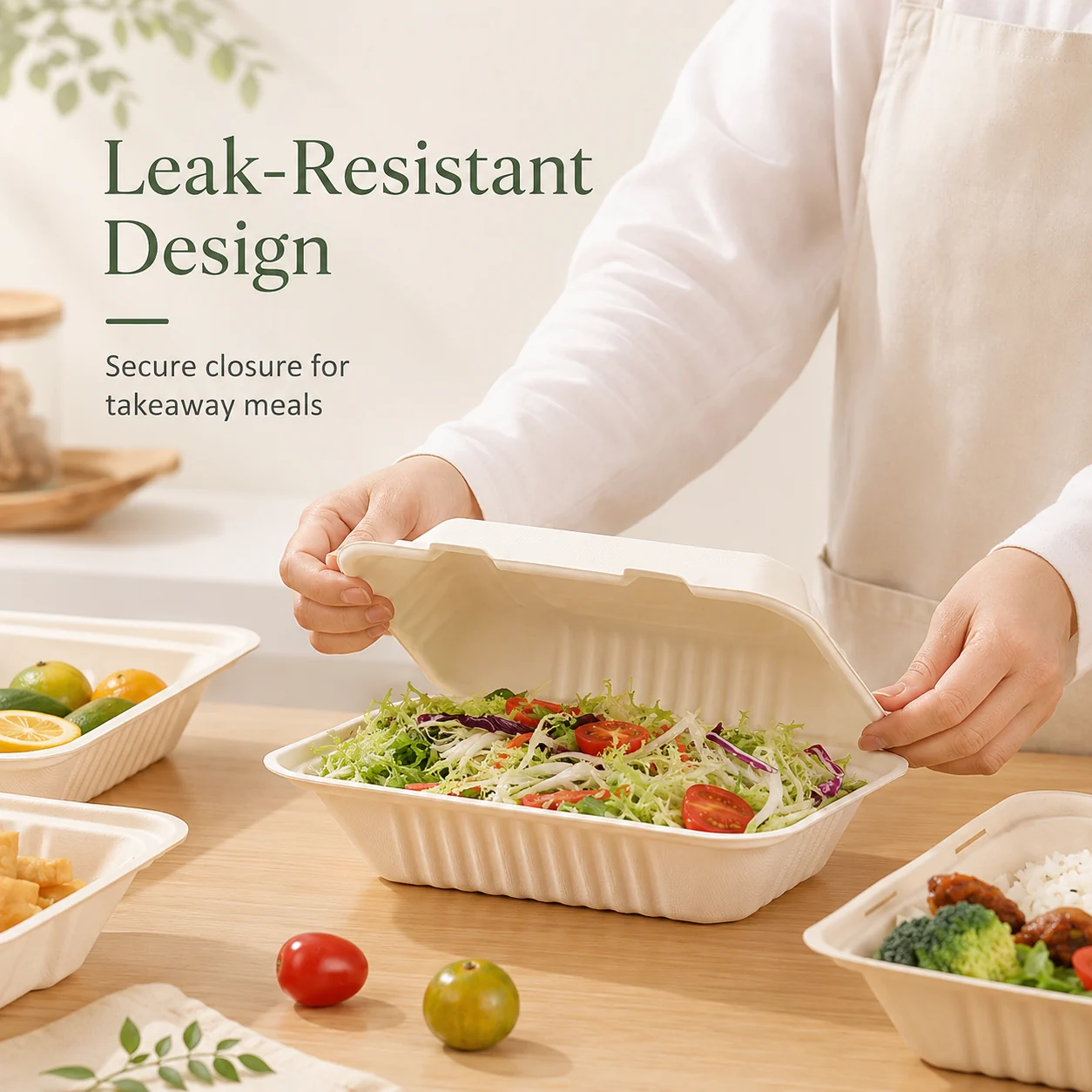
A compostability claim is only as strong as four things: the exact product, the exact formulation, the composting route named in the claim, and a certificate or test report whose scope covers all three. A bagasse clamshell and a bagasse bowl from the same factory are not automatically covered by the same document. A printed, sleeved or lidded version of a certified item is not automatically covered either. And a product that passes in an industrial facility has not been shown to break down in a home compost heap.
EN 13432 and ASTM D6400 are specifications for packaging recoverable through composting and biodegradation. Neither is a food-contact approval, a safety certificate for all uses, or a guarantee that a local waste operator will accept the item. Treat them as one part of a document pack, alongside food-contact evidence for the destination market, which ECONOVAPACK’s compliance document page and document review checklist explain in more detail.
Head-to-head
EN 13432 versus ASTM D6400 at a glance
| Question | EN 13432 (Europe) | ASTM D6400 (North America) |
|---|---|---|
| What it covers | Packaging recoverable through composting and biodegradation, tested as a finished item | Plastics designed to be aerobically composted in municipal or industrial facilities, tested as a finished item |
| Biodegradation threshold | At least 90% of the organic material converted to carbon dioxide within 6 months under test conditions | At least 90% conversion to carbon dioxide, water and biomass within 180 days under test conditions |
| Disintegration threshold | At least 90% of the material reduced to fragments smaller than 2 mm within 12 weeks in a controlled composting test | At least 90% disintegration to fragments smaller than 2 mm within 84 days in a controlled composting test |
| Ecotoxicity | Compost produced in the test must not show adverse effects on plant growth, with limits on heavy metals and other regulated substances | Compost produced in the test must meet ecotoxicity requirements, with limits on heavy metals and regulated substances |
| Typical certification marks | Seedling logo and OK compost INDUSTRIAL, issued by certifiers against EN 13432 | BPI Commercially Compostable mark, issued against ASTM D6400 and related specifications |
| Home composting? | No. Home compostability is a separate claim, tested under lower, variable temperatures | No. Home compostability is a separate claim and is not covered by ASTM D6400 |
Thresholds are summarised from the published standards; always confirm the edition, laboratory and certificate scope on the document itself.
1. The four tests every claim must pass
Characterisation. The laboratory first records what the item is made of: its composition, volatile solids content and any regulated substances. A product with a high mineral or non-biodegradable fraction cannot pass simply because its main ingredient is plant-based. Fillers, coatings, adhesives, inks and colorants all count, because the finished item is what is tested.
Biodegradation. Microorganisms must convert at least 90% of the organic carbon into carbon dioxide within the set period, measured against a reference material. This is a laboratory measurement under controlled conditions, not a claim about landfill, sea or a cold garden heap.
Disintegration. The item must physically break apart in a composting trial so that at least 90% passes a 2 mm sieve within 12 weeks (EN 13432) or 84 days (ASTM D6400). A material can biodegrade in a flask test yet fail disintegration if its shape, thickness or coating keeps fragments visible in finished compost. Thickness matters here: a thick-walled tray and a thin plate of the same formulation can have different results, which is why certificates state a maximum thickness or a product range.
Ecotoxicity and substance limits. The resulting compost is tested for effects on plant germination and growth, and the material must stay within limits for heavy metals and other regulated substances. This is the test most often skipped in marketing summaries, yet it is what separates a compostable claim from a merely biodegradable one. A product that fragments quickly but leaves harmful residues behind does not meet either standard.
2. Industrial composting is not home composting
Both standards describe industrial or commercial composting: sustained high temperatures, typically around 55–60°C, with managed moisture, aeration and turning. A home compost heap rarely holds those temperatures for weeks, and winter heaps may barely warm at all. A product certified for industrial composting should therefore be described as “commercially compostable” or “industrially compostable”, with the facility route named where the destination requires it.
Separate schemes exist for home composting, such as OK compost HOME and the Australian AS 5810 standard, which test at lower, ambient temperatures over a longer period. A supplier offering a home-compostable claim should show a separate certificate for that scheme. If the only document on file is an EN 13432 or ASTM D6400 certificate, do not approve home-composting wording, a home compost symbol, or a “composts in your garden” line on the pack.
The same discipline applies to the end of the chain. Even a correctly certified item only becomes compost if a local facility accepts foodservice packaging, collects it in the right stream and actually composts it. Before a distributor promises customers a composting route, check acceptance with the waste operator or composter in each sales region. A claim that is technically certified but has no collection route behind it will still mislead the end user.
3. Five scope traps that void an otherwise real certificate
Wrong product. Certificates name a product, a product family or a defined range. A certificate for a plain bagasse plate does not cover a hinged clamshell, a bowl with a different wall thickness, or a cutlery set. Ask for the certificate appendix or product list and find the exact SKU, or the closest defined family description, before approving artwork.
Wrong thickness or weight. Disintegration depends on thickness. Many certificates state a maximum thickness, a maximum grammage or a weight range. A heavier, thicker version of a certified item may sit outside that range. Compare the quoted item’s measured thickness and weight against the certificate, not just its shape and colour.
Changed formulation. A new coating, waterproofing treatment, adhesive, ink system, sleeve or label can change the result. Bagasse items in particular vary by fibre treatment and surface finish. If anything in the construction changes after certification — including a switch of ink or label stock for a printed run — ask whether the certifier’s scope still covers the finished, printed item or whether a new assessment is needed.
Lid and accessory mismatch. A certified base with an uncertified lid is not a certified set. Lids are often a different material, sometimes a conventional plastic, and they carry their own claim profile. Check the base and lid separately, and write the claim for the set exactly as the documents support: if only the base is certified, the artwork must say so.
Expired, suspended or borrowed documents. Certificates carry validity dates, a holder name and a certificate number. Verify that the holder is the supplier or its named manufacturer, that the certificate is current, and that the number can be checked with the certifier. A test report from a raw-material supplier, a certificate in another company’s name, or a logo copied from a competitor’s page is not evidence for the item being quoted.
4. How to read a certificate in ten minutes
Start with the holder and the number: who owns the certificate, and can the certifier confirm it? Then read the product description and appendix line by line against the quotation. Note the standard and edition, the maximum thickness or weight, the colour and formulation limits, and any exclusions for printing, coatings or accessories. Check the issue and expiry dates, and confirm that the document is a certificate or a full test report rather than a one-page declaration written by the supplier itself.
Next, separate the standard from the mark. EN 13432 and ASTM D6400 are standards; the Seedling logo, OK compost INDUSTRIAL and BPI marks are certification marks governed by scheme rules on logo use, minimum size, colour and accompanying wording. A supplier may hold a passing test report without holding a licence to print a particular mark. If the artwork will carry a mark, ask for the licence or the certifier’s written permission for that mark on that product.
Finally, check the market fit. EN 13432 is the reference most European buyers and composters recognise; ASTM D6400 is the reference most North American composters recognise. Some destinations add their own rules on labelling, producer responsibility or restricted substances, and a European certificate does not automatically satisfy a North American buyer’s checklist, or the reverse. Record which standard each destination file relies on, so a later order for a new market reopens the check instead of inheriting the old one. ECONOVAPACK’s material comparison guide applies the same finished-item discipline to bagasse, plastic and PE-lined paper choices.
5. Claim wording: what is safe, what is not
Safe wording names the route and the scope: “Commercially compostable where facilities exist. Certified to EN 13432” for a covered European item, or the equivalent ASTM D6400 wording for a covered North American item, with the certifier’s mark used only under licence. If the certificate covers the base but not the lid, the wording should say exactly that, or the lid should be removed from the claim.
Avoid four common overstatements. Do not call an industrially compostable item “biodegradable” without qualification, since that word alone can imply breakdown in any environment. Do not call it “home compostable” without a home-composting certificate. Do not call it “plastic-free” if any component, coating or lid contains plastic. And do not promise that it “will compost” without naming the facility route, since the outcome depends on collection and processing that the supplier does not control.
For distributors, the safest artwork rule is simple: every environmental word on the pack must trace to a document in the order file for that exact item. If the document cannot be produced for a word, the word comes off the artwork. That rule also protects the distributor if a retailer, regulator or end customer asks for proof later.
6. The document pack to request before you order
Send the supplier a short, written request rather than accepting a logo by email. Ask for: the certificate or test report for the exact SKU and construction, including the product appendix; the maximum thickness or weight covered; the certifier, certificate number and validity dates; confirmation of whether printing, coatings, sleeves, labels and lids are inside the scope; the licence for any certification mark that will appear on the pack; and the food-contact documents for the destination market, which are a separate file from the compostability evidence.
Keep the reviewed pack with the approved sample and the signed specification. If a later order changes the formulation, treatment, coating, colour, thickness, print system or factory, reopen the document check before production rather than carrying the earlier approval forward. The same rule applies when the same item is sold into a new market: the compostability standard, the labelling rules and the accepted collection route must be rechecked for that market.
When the specification is ready, include the destination, the exact claim wording planned for the pack, and the list of documents required, so the quotation can confirm scope item by item. ECONOVAPACK supplies compostability or PFAS-related evidence only where it is included in the quotation for the selected item and route, and confirms applicability against the quoted product before production. Send the RFQ with the item, the intended claim and the destination market included, and review the evidence before artwork is frozen.
Frequently asked questions
Does EN 13432 certification mean a product is also certified in the United States? No. EN 13432 is a European standard and ASTM D6400 is the North American reference. Some formulations pass both, but each requires its own testing and certification scope.
Can a bagasse item be compostable without a certificate? Bagasse fibre is plant-based, but a compostability claim still needs evidence for the finished item, including its treatment, coatings and inks. Without a certificate or test report in scope, use narrower wording about composition instead of a compostable claim.
How long does certification take? Laboratory testing runs over weeks to months, plus certification review. A supplier promising a certificate in days for a new formulation should be asked which document already exists.
What if my city has no commercial composting collection? Then a commercially compostable item has no local composting route, however valid its certificate. Check collection and acceptance before printing a composting claim for that market.