ECONOVAPACK
Disposable Packaging for Catering and Events
Compare plates, trays, containers, cups, cutlery and napkins for catering and event service.
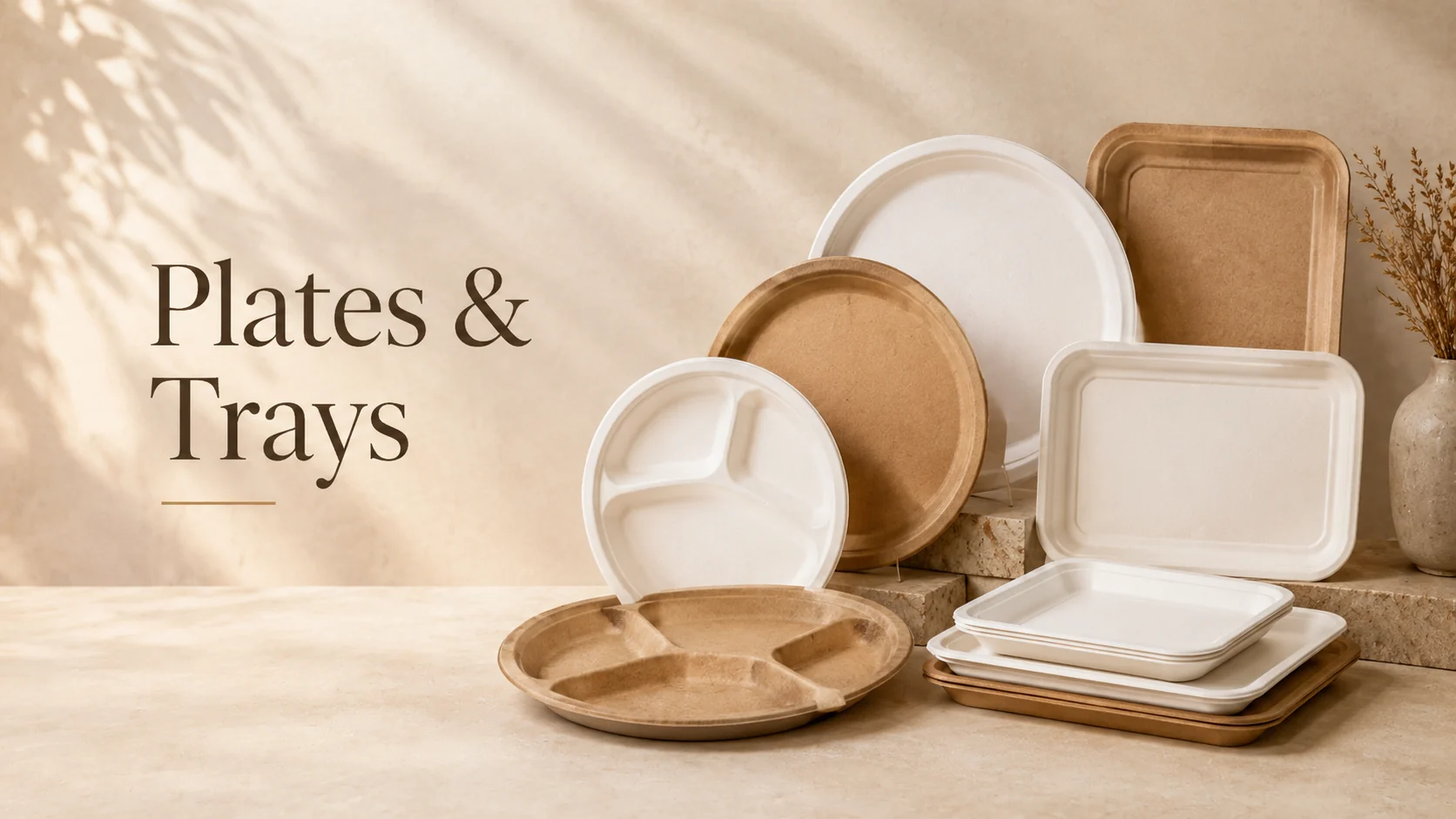
Choose the core packaging categories around food type, service method, destination and storage requirements.
Confirm size, material, estimated quantity, MOQ, sampling, printing and lead time for each selected item.
Request carton data, pallet options and consolidated packing information for freight planning.
Inquiry path
Send one clear request
Share product type, size, quantity, printing needs, destination and target use. Our sales team will reply with practical sourcing options.
Selection guide
Specifying catering and event packaging around headcount and menu
Catering and events buy packaging backwards from the guest list: headcount sets the piece count, the menu sets the materials, and the venue sets the presentation standard. A working event specification therefore starts with covers per event and events per month, then maps each course to a format — bagasse plates and bowls for served courses, clamshells and boxes for boxed service, cutlery sets or wrapped kits where hygiene and speed matter, and cups with matched lids for beverage stations.
The event-specific risk is the mixed load. A caterer rarely orders one SKU; the order is a kit of eight to fifteen items that must arrive together, complete, before a fixed date. That changes the buying discipline: every SKU is specified and sampled separately, but the order is managed as one delivery program with one loading plan and a dispatch date worked backwards from the event calendar, with buffer for transport and clearance.
Presentation upgrades should be specified, not implied. Compartment plates that keep courses separate, rigid cutlery that survives a full meal, and napkins matched in color and fold are all line items with their own samples. Where an event carries an environmental commitment, the claim wording for fiber items follows the same per-SKU certification discipline as any other order — the event deadline does not relax it.
Headcount × courses gives the piece count per format; add breakage and service spares as an explicit percentage in the order rather than a last-minute top-up.
Each item is its own SKU at a 10,000 pcs minimum; the program is consolidated into one container and one dispatch plan worked backwards from the first event date.
Compartment separation with real food, cutlery rigidity across a full meal, plate stiffness under a loaded portion, and lid fit on beverage cups — all sampled before the event order.
FAQ
Disposable Packaging for Catering and Events — frequently asked questions
Start from headcount and courses: covers × plates, bowls, cups and cutlery sets per guest, plus a service spare allowance you choose. Each format is then ordered as its own SKU at the 10,000-piece minimum, which suits caterers running repeated events; the full kit is consolidated into one shipment and loading plan.
Yes. Plates, bowls, clamshells, cutlery kits, cups, lids and napkins are specified and sampled item by item, then produced and loaded as one program. The dispatch date is planned backwards from your event calendar — production normally takes 10–30 days from the frozen specification, plus transport and customs clearance.
Molded bagasse plates, bowls and trays give a rigid, matte presentation for served courses; compartment formats keep wet and dry items separate. Rigid cutlery sets or individually wrapped kits handle the hygiene and speed side. Approve the full place setting on samples with your menu before fixing the event specification.
Only for the exact items covered by third-party certification to EN 13432 or ASTM D6400/D6868 in your market. Ask for the certificate number and match it to the SKU; resin items in the same kit, such as PET cups, are not compostable. Claim wording is confirmed per SKU and destination before it is printed or published.
The kit is planned as one program with a single loading and dispatch plan, and the specification freeze date is set so all items complete together. If your event date is fixed, say so at quotation stage: the dispatch window, buffer and shipping method — sea or air for a top-up — are agreed before production starts.
Yes. Standard samples are free of charge; the buyer covers the international courier cost. Assemble the full setting — plate, bowl, cutlery, cup, lid and napkin — and test it with your menu and service style. The approved set becomes the reference for the event order and for repeat events.