ECONOVAPACK
Food Packaging for Distributors and Wholesalers
Build a practical range of bags, cups, containers, wraps, napkins and cutlery for repeat B2B supply.
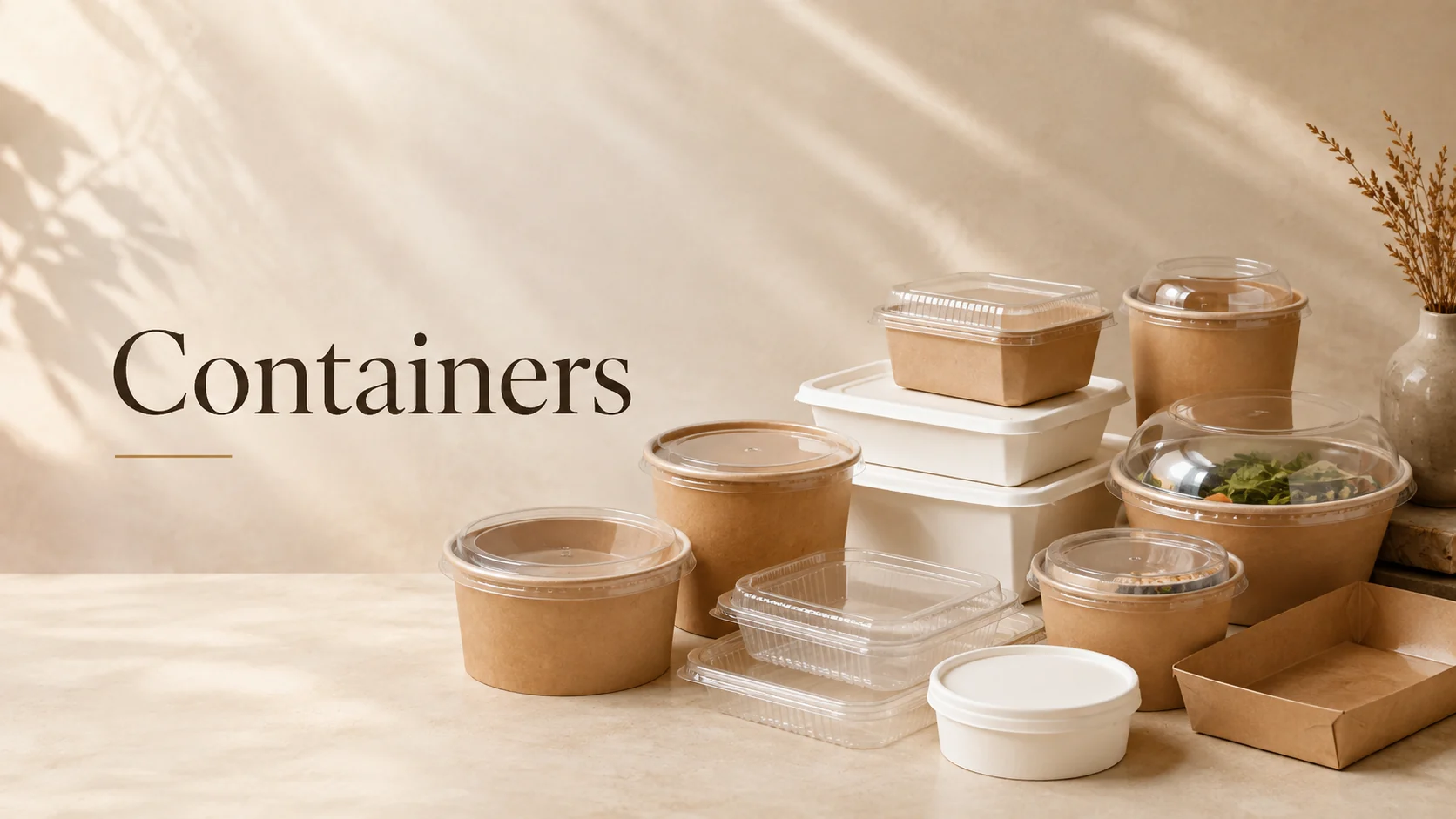
Choose the core packaging categories around food type, service method, destination and storage requirements.
Confirm size, material, estimated quantity, MOQ, sampling, printing and lead time for each selected item.
Request carton data, pallet options and consolidated packing information for freight planning.
Inquiry path
Send one clear request
Share product type, size, quantity, printing needs, destination and target use. Our sales team will reply with practical sourcing options.
Selection guide
How distributors build a consolidated food packaging range
Distributors buy differently from end users: the range is the product. A workable import range usually anchors on the high-turnover families — takeaway containers and clamshells, paper and PET cups with lids, kraft boxes and bags, napkins and cutlery — with each family carried in a small number of proven SKUs rather than a long tail of sizes. Every SKU is specified once, sampled once and then reordered against the approved sample, which is what makes a multi-family container program manageable.
The distributor's core calculation is landed cost per saleable unit, and packaging volume dominates it. Carton CBM, pieces per carton and container utilization decide whether a range is profitable before any unit price is discussed, so the specification process collects carton data per SKU and builds the loading plan across the range: heavy, compact items and light, bulky items are mixed deliberately to use the container's volume and weight allowance together.
Private label is the second profit lever. Distributor brands are carried through printed cartons, sleeves, wraps and printed items with the distributor's marks, while the underlying SKUs stay identical to the standard range. That separation — brand layer variable, product layer frozen — keeps reorders simple and quality consistent across seasons and promotions.
Anchor families with few, proven SKUs each; every SKU specified and sampled once, then reordered against the approved sample and frozen specification.
Carton CBM and pieces per carton collected per SKU; loading plans mix compact and bulky items deliberately. Usable planning volumes: about 25–28 CBM (20ft), 65–70 CBM (40HQ).
Private-label cartons, sleeves, wraps and printed items over a frozen product base — artwork and carton marks versioned per SKU, product specification unchanged.
FAQ
Food Packaging for Distributors and Wholesalers — frequently asked questions
Yes — that is the normal distributor pattern. Containers, cups, lids, boxes, bags, napkins and cutlery are each specified as separate SKUs, each meeting its own 10,000-piece minimum, and the loading plan is built across the range from each item's carton dimensions and CBM, mixing compact and bulky lines deliberately.
Compare on the same basis: identical material, dimensions, unit weight, pack count, printing scope, incoterm and destination, then divide the full container cost by saleable pieces. Carton CBM and pieces per carton usually move landed cost more than small unit-price differences, which is why the quotation states packing data per SKU.
Yes. Private-label carton printing, sleeves, wraps and printed items carry your brand while the underlying product specifications stay frozen. Share vector artwork and carton-mark requirements, approve printed samples, and each branded SKU keeps its own artwork version in its specification for clean reorders.
Reorders run against the approved samples and frozen specifications: same SKU, material, dimensions, packing and marks, with the dispatch window — normally 10–30 days depending on quantity and printing — confirmed per order. Any requested change is treated as a specification revision and re-sampled rather than edited informally.
Documents are matched to the exact product, material and destination: food-contact documentation and, for fiber items, any compostability certification held for that SKU. Files are reviewed confidentially during qualification and quotation and can support your customer onboarding; certificate numbers are not published on this website.
Standard samples across the range are free of charge; the buyer covers the international courier cost. Distributors usually sample the anchor SKUs first — the highest-turnover sizes per family — approve them with their key accounts, and then extend the range family by family against the same specification discipline.