ECONOVAPACK
Private Label Food Packaging Programs
Coordinate artwork, samples, printed cups, bags, boxes, wraps and export packing for brand launches.
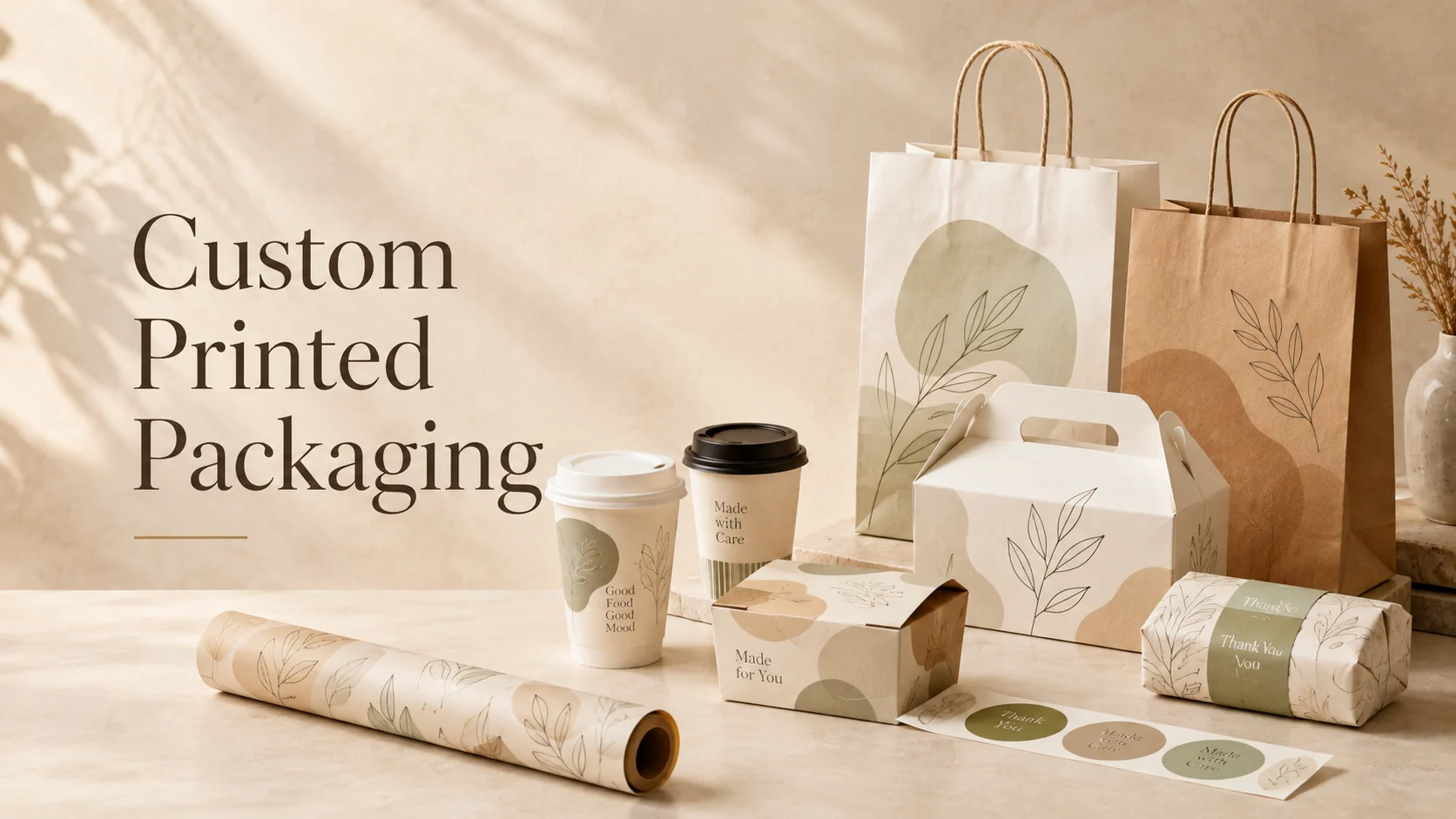
Choose the core packaging categories around food type, service method, destination and storage requirements.
Confirm size, material, estimated quantity, MOQ, sampling, printing and lead time for each selected item.
Request carton data, pallet options and consolidated packing information for freight planning.
Inquiry path
Send one clear request
Share product type, size, quantity, printing needs, destination and target use. Our sales team will reply with practical sourcing options.
Selection guide
Private-label food packaging: artwork, packing and approval control
A note on terms first: in this category, private label means your brand printed on the packaging itself — cups, boxes, bags, sleeves, wraps and cartons — not food manufacturing. Food brands and retail programs use it to make the pack carry the brand at the shelf and in the customer's hand, and the work is specification work: artwork, print method, substrate behaviour and retail-ready packing, controlled per SKU.
Retail-ready packing is where private-label programs differ from plain wholesale. Inner packs may need printed film or sleeves with barcodes, retail cartons need marks and labeling that match the destination's rules, and multipack configurations must survive shelf handling. Each of those is a specification field — barcode check, warning and recycling text, carton mark, inner count — agreed before production, because a packaging run cannot be corrected after it is printed.
The approval chain protects the brand: vector artwork with color references, a proof per substrate, a physical printed sample approved under retail lighting, and then the frozen specification that production and inspection work against. Color that is right on a paper cup is not automatically right on a bagasse lid or a PET cup, so each substrate keeps its own approved sample in the program file.
Vector artwork master, Pantone or color references, barcode files, and destination warning/recycling text — supplied once, versioned, referenced by filename in every SKU specification.
Inner pack format and count, printed film or sleeve, retail carton marks and labeling, multipack configuration — all fixed in the specification before the print run.
Paper, PET and molded fiber each get their own proof and physical sample; the approved sample set is the standard for inspection and for every reorder.
FAQ
Private Label Food Packaging Programs — frequently asked questions
It covers your brand applied to the packaging: printed cups, boxes and bags, printed sleeves and wraps, labelled inner packs and printed export or retail cartons. It is packaging branding, not food production. Each branded item is specified and sampled per substrate before the program is frozen.
The standard minimum is 10,000 pcs per SKU/specification — one item, one artwork. If a specific item can run at a different minimum, it is confirmed in the written quotation for that item. Different designs or sizes cannot be pooled to reach the minimum, though they can share a container.
Vector artwork (AI, PDF or EPS) with fonts outlined, color references for brand-critical colors, barcode files, and the warning, recycling or origin text your market requires. We confirm printable area and print method per item, produce proofs and printed samples, and reference the artwork filename and revision in the order.
Yes. Inner-pack format, count, printed film or sleeve, barcode placement and retail carton marks are specification fields agreed before production. Barcodes are checked for scanability on the printed sample, and the approved pack becomes the reference for inspection and repeat orders.
Each substrate — paperboard, PET, molded fiber — receives its own proof and physical printed sample, approved under consistent lighting against your color references. The approved sample set is kept as the program standard; production and inspection compare against those physical samples rather than against screen files.
Plan on the sample and approval stage first — custom printed samples are planned at roughly 7–15 days — then production ready for dispatch in 10–30 days from the frozen specification, depending on quantity, print scope and packing. International transport and customs clearance are additional to the dispatch window.